Taming the Beast
converting AI non-sense into a tool for professional digital content production
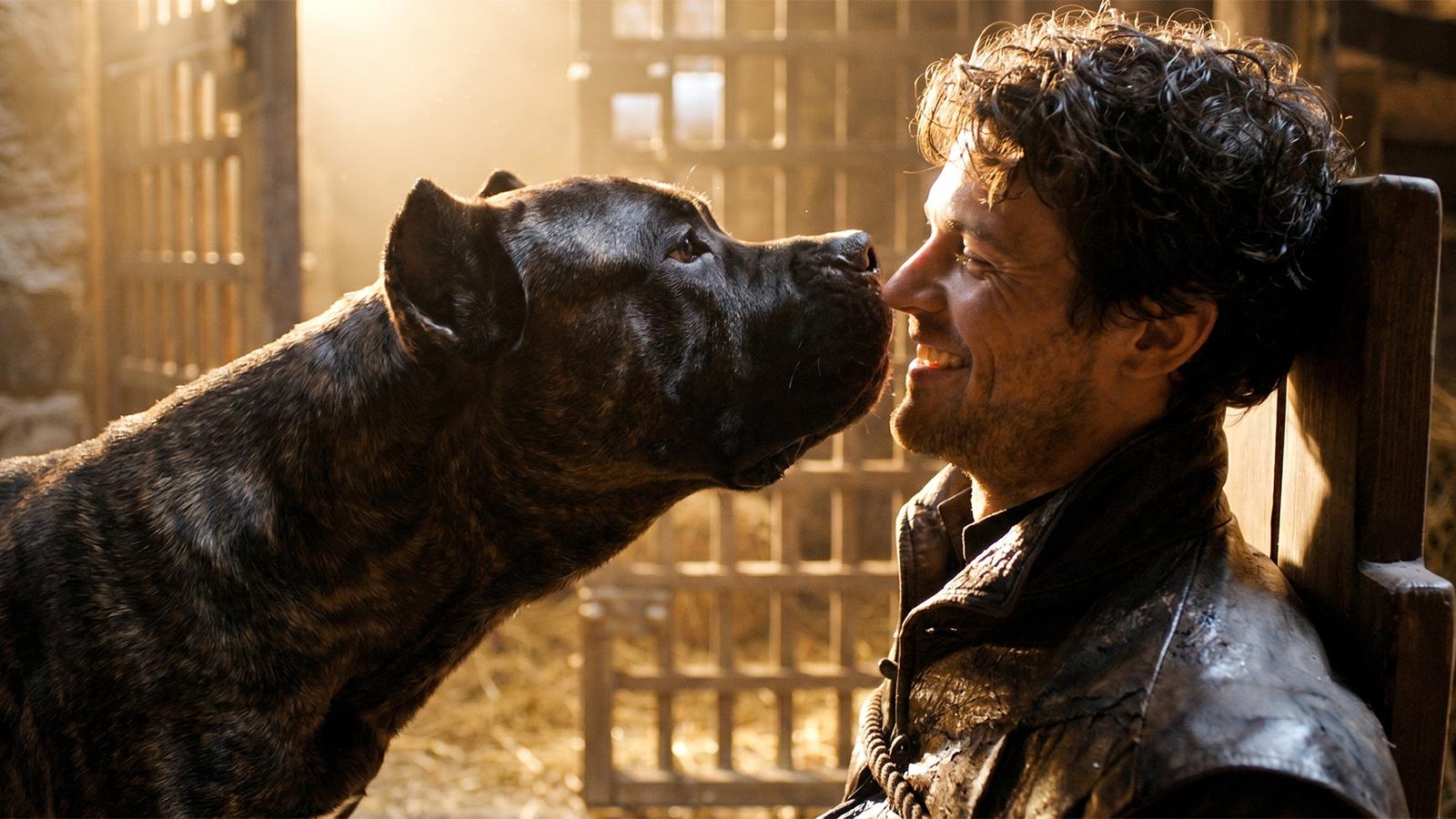
Anyone remember what happened after the Battle of the Bastards to Ramsay Bolton?
I am talking about Game of Thrones, of course. But for those who missed this phenomenal episode—an episode with a higher budget than most cinema releases at the time—here is how it went: his army is defeated, he retreats inside Winterfell, but is ultimately captured and tied to a chair inside his own kennels. Being the arrogant bastard he always was, he thinks his hounds are loyal beasts who will never harm him. Unfortunately for Ramsay, to ensure the hounds were ravenous enough to eat his prisoners, he had explicitly starved them for seven days.
The rest would be spoiling too much for anyone who has lived under a rock for the last ten years. But I believe anyone can guess what happens to people living in the illusion of control.
Yes.
The illusion of control, the scourge of our time. It is observable more than ever across the digital landscape. People are unknowingly bragging, advertising themselves as masters, acting as if the tiniest miscalculation isn't enough to tear them down.
Right now, the creative industry is sitting in that exact chair, looking at generative AI.
We type a text prompt. We point the algorithm in a general direction. The machine generates a stunning, hyper-realistic image in seconds. Because the beast ran where we pointed, we believe we are holding the leash. We think they are the master.
But generative AI is not a subservient tool. It is an incredibly powerful, entirely untamed beast.
When you rely on out-of-the-box AI to generate a commercial campaign, you are trusting a system that fundamentally does not understand spatial logic, millimeter-accurate product dimensions, or temporal consistency. It guesses. It hallucinates. It alters physics. The world is dazzled by the raw power of the output, completely blind to the fact that the machine is just doing whatever it pleases.
At Fengs, we recognize the beast for what it is. And more importantly, we know that pointing is not controlling.
As a digital production solutions studio, with a deep understanding on computer generated imagery with our team's background we do not politely ask the machine to perform.
We build the cage.
We do not rely on the algorithm's good behaviour; we engineer the workflow and force the raw power of AI into rigorous, human-guided pipeline.
We do not guess. We architect the digital realities. Because in this industry, if you don't control the beast, it will eventually tear your visual consistency apart.
An algorithm produces output. Output is merely a byproduct—a mathematical guess generated by a machine that doesn't understand your brand, your story, or your physical reality. It is the beast doing what it pleases.
Content is entirely different. Content is deliberate. It requires intent, narrative, and uncompromising structure.
The industry is currently drowning in outputs, mistaking speed and volume for actual value. It is time to step out of the illusion.
Welcome to the new standard of digital production.
Welcome to the Fengs reality.
Here, we do not settle for the algorithm’s best guess.
We do not generate outputs.
We craft content.