When the Product Left the Screen
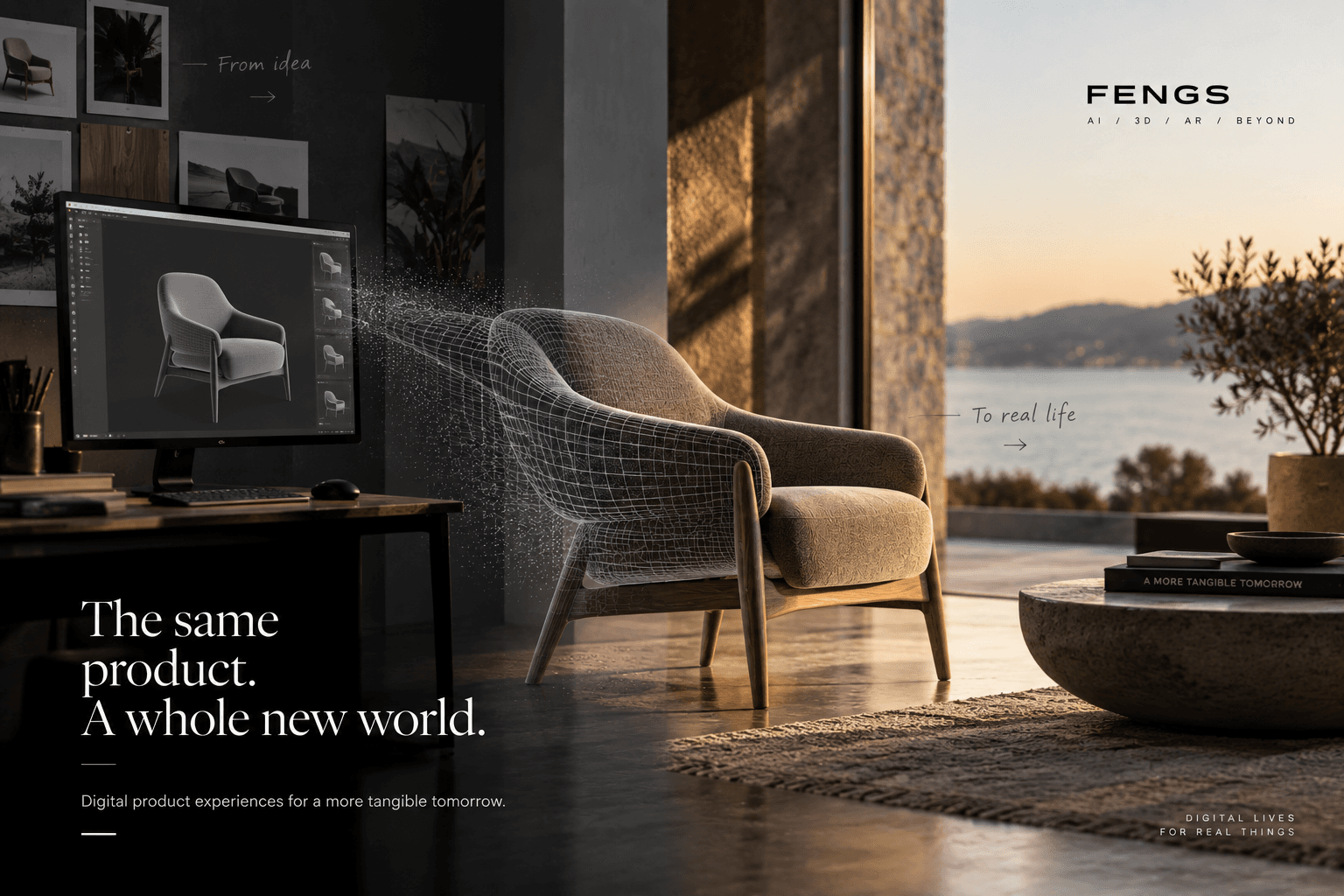
The product had existed on a screen for months.
It started as a drawing, then became a 3D model. Someone had spent days getting the proportions right, refining the surfaces and making sure every detail looked exactly as it should.
For a while, that was enough.
The model became a few beautiful renders. Those renders went into presentations, sales materials and eventually onto a website.
Then, during one of the reviews, someone asked a different question.
What if we didn't just show the product? What if we let people experience it?
We took the model out of the software and placed it inside an environment.
Suddenly, you could move around it, look at it from different angles and get closer to details that a single image could never show.
Then we started changing things.
Materials. Colours. Configurations.
The product hadn't changed.
But the relationship between the product and the person looking at it had.
The 3D model had stopped feeling like an asset.
It started feeling like a place.
For years, digital commerce has been built around the idea of showing products better.
Better photography. Better renders. Better video.
We have become very good at making things look real.
But there is a difference between looking at something and experiencing it.
A photograph can show you a chair.
An interactive 3D environment can let you walk around it.
A catalogue can show you a yacht.
A digital experience can let you step inside it, change the materials and explore different configurations.
A building can be experienced before it is built.
A piece of furniture can be placed in a customer's home before it is delivered.
The physical object remains the same.
The way we meet it changes.
This is where AI becomes interesting.
Not because it can make another beautiful picture. We already know it can do that.
The more interesting possibility is what happens when AI becomes part of a larger digital product experience.
It can help create variations, adapt environments and shorten the distance between an idea and something a customer can actually experience.
But AI doesn't have to be the experience.
It can simply be one of the things that makes the experience possible.
The same digital product can move from a 3D model into a campaign, from a campaign into an interactive environment, and from there into AR and eventually the physical world.
Something else changes, too.
The conversation moves earlier.
A customer doesn't have to wait until a product is finished to start making decisions about it.
A designer can communicate possibilities more naturally.
A sales team can show more than static presentations.
The product can start communicating long before it physically arrives.
We used to create digital content about products. We are beginning to create digital experiences with products.
The original 3D model is still there.
But it is no longer just a file.
It can become a showroom, a configurator, an AR experience, a sales tool or something that hasn't been invented yet.
It has become the starting point.
At Fengs, we believe the digital life of a product can be much bigger than the content created around it.
We bring together AI, 3D and AR to turn digital representations of products and spaces into experiences people can explore, interact with and remember.
Because the future of digital commerce may not be about making products look more real.
It may be about making them feel real before they exist.
Sometimes, the screen is just where the product begins.